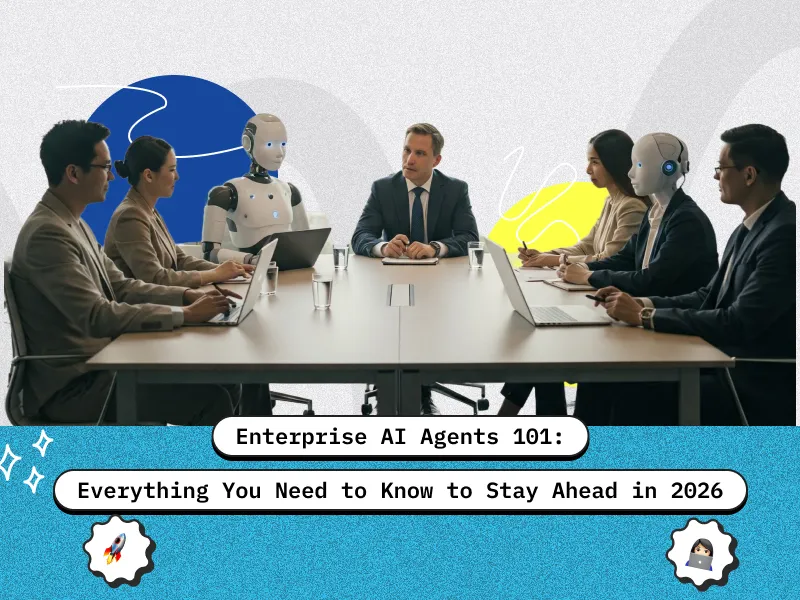
In the rapidly evolving digital landscape, businesses are constantly seeking innovative ways to boost efficiency, enhance decision-making, and create superior experiences for their customers and employees. This pursuit has led to the emergence of enterprise AI agents – sophisticated software entities designed to operate autonomously within a company's ecosystem. These intelligent agents promise to transform operations by automating complex tasks, processing vast amounts of data, and providing actionable insights. However, the true power of an enterprise AI agent lies not just in its algorithms, but in its ability to seamlessly access, process, and present high-quality, reliable information. Just as a human professional relies on accurate data, so too do these digital colleagues depend on a robust foundation of well-sourced content and intelligent integration.
The Foundation of Intelligent Operations: Understanding Enterprise AI Agents
Enterprise AI agents are more than just chatbots or simple automation scripts; they are advanced computational systems capable of understanding context, making decisions, and performing a sequence of tasks to achieve specific business objectives. From automating supply chain management and personalizing customer interactions to streamlining internal IT support and financial analysis, their applications are vast and varied. These agents are programmed to interact with various systems, extract relevant data, analyze it, and then execute actions or provide recommendations, often learning and adapting over time. The fundamental premise behind their effectiveness is their capacity to access and process information with unprecedented speed and scale. Without a rich, diverse, and credible data feed, even the most sophisticated enterprise AI agents would struggle to deliver on their promise, underscoring the critical need for well-structured data access and management.
API-Driven Intelligence: Connecting Enterprise AI Agents to a World of Data
The lifeblood of any effective enterprise AI agent is its ability to connect to a multitude of data sources, both internal and external. This is primarily facilitated through Application Programming Interfaces (APIs). Much like how a global visual content creator and marketplace like Getty Images leverages its API technology to provide high-quality imagery to platforms like Perplexity, enterprise AI agents rely on APIs to tap into a vast ecosystem of information. This integration is not merely about pulling data; it’s about establishing a dynamic dialogue between the AI agent and the systems it needs to interact with.
- Accessing Diverse Data: APIs enable enterprise AI agents to retrieve information from disparate sources, whether it's customer relationship management (CRM) systems, enterprise resource planning (ERP) platforms, financial market data feeds, news APIs, or even specialized visual content APIs. This broad access enriches the agent's understanding and capability.
- Real-time Insights: In fast-paced business environments, outdated information is as good as no information. APIs provide enterprise AI agents with the means to fetch up-to-the-minute data, ensuring that decisions are based on the freshest possible insights.
- Seamless Integration: Well-designed APIs facilitate the embedding of AI capabilities into existing workflows without significant overhauls. This ensures that the implementation of enterprise AI agents enhances rather than disrupts current business processes, creating a richer, more engaging, and reliable experience for all users.
The ease and reliability of API integration directly impact an enterprise AI agent's performance, highlighting the importance of robust, well-documented API infrastructures.
Beyond Data: The Critical Role of Quality, Attribution, and Ethical Governance for AI Agents
While access to vast amounts of data is essential, the utility of an enterprise AI agent is ultimately determined by the quality and integrity of that data. The partnership between Getty Images and Perplexity, emphasizing "high-quality and differentiated creative and editorial imagery" and "improving image credit with link to source," provides a powerful analogy for the broader ethical and practical considerations for enterprise AI. For AI agents operating in a business context, these principles translate into crucial requirements:
- Data Quality is Paramount: Just as Perplexity seeks to enhance user experience with superior visuals, enterprise AI agents demand clean, accurate, and relevant data. "Garbage in, garbage out" is a fundamental truth in AI; flawed or biased input data will lead to erroneous decisions and unreliable outputs. Enterprises must invest in data validation and cleansing processes.
- The Imperative of Attribution and Source Validation: When an enterprise AI agent processes information, generates reports, or makes recommendations, understanding the data's origin and ensuring its credibility is vital. This is the business equivalent of image attribution. It ensures accountability, helps validate information, and builds trust. For instance, if an AI agent recommends a specific investment strategy, knowing the sources of its financial data and analysis is crucial for human review and compliance.
- Ethical AI and Legal Compliance: Operating ethically and legally is non-negotiable for enterprise AI. This encompasses respecting data privacy regulations (like GDPR and CCPA), upholding intellectual property rights (even for internally generated data), and proactively mitigating algorithmic bias. The Perplexity agreement's focus on "how to use licensed imagery legally" underscores that AI systems must operate within defined legal and ethical boundaries, preventing potential liabilities and fostering responsible AI deployment.
By upholding these principles, enterprises can ensure their AI agents are not just efficient, but also trustworthy and compliant, ultimately building a more engaging and reliable experience for all stakeholders.
Enhancing Enterprise Outcomes: From User Experience to Strategic Advantage
The ultimate goal of deploying enterprise AI agents is to generate tangible business value. The "enhanced user experience" and "more engaging and reliable experience" cited in the Getty Images partnership can be expanded to encompass a wide array of business outcomes that drive strategic advantage. Enterprise AI agents are designed to deliver improvements across the board:
- Streamlined Operations: By automating repetitive, time-consuming tasks – from data entry and report generation to customer service inquiries – AI agents free up human capital to focus on more complex, strategic initiatives. This significantly boosts operational efficiency and reduces costs.
- Smarter Decision-Making: Enterprise AI agents can analyze vast datasets far more quickly and comprehensively than humans, identifying patterns, correlations, and anomalies that might otherwise go unnoticed. This provides leadership with data-driven insights for strategic planning, market trend analysis, and agile operational adjustments.
- Superior Customer and Employee Experience: Personalized interactions, faster query resolution, and proactive problem-solving delivered by AI agents can dramatically improve customer satisfaction. Internally, AI agents can automate support functions, reducing employee frustration and improving productivity, creating a more engaging and positive work environment.
By effectively leveraging enterprise AI agents, businesses can move beyond mere automation to truly transform their capabilities, leading to measurable improvements in profitability, innovation, and competitive positioning.
Forging Strategic Partnerships for Successful AI Agent Deployment
The complexity and scope of implementing powerful enterprise AI agents mean that success often hinges on strategic partnerships. The multi-year image partnership between Getty Images and Perplexity serves as an excellent model, demonstrating how collaboration between entities with complementary strengths can unlock significant value. For enterprises looking to deploy intelligent AI agents, similar collaborative strategies are paramount:
- Vendor Ecosystems: No single company can be an expert in all facets of AI. Enterprises benefit immensely from partnering with AI platform providers, specialized data suppliers, system integrators, and consulting firms. These collaborations bring together the best-of-breed technologies and expertise required to build robust AI solutions.
- Data Licensing and Access Agreements: Just as Perplexity needed a clear agreement with Getty Images for content access, enterprises must establish formal data licensing and access agreements for external data sources. These agreements ensure legal compliance, data quality, and uninterrupted access critical for an AI agent's continuous operation.
- Shared Vision and Collaboration: The Getty/Perplexity partnership was founded on a shared belief in the importance of attribution and accuracy in the age of AI. Similarly, successful enterprise AI initiatives require partners who share a common vision for ethical AI, data integrity, and achieving specific business outcomes. Collaborative development and continuous feedback loops ensure that the AI agents evolve to meet changing business needs.
Such partnerships are not just about technology; they are about fostering a collaborative ecosystem where data, expertise, and innovation converge to empower the next generation of enterprise AI agents.
The journey towards fully realizing the potential of enterprise AI agents is a multifaceted one, requiring careful consideration of technology, data, ethics, and strategy. As we've explored, the foundation of successful AI lies in robust API integrations, access to high-quality and ethically sourced data, and the ability to attribute information accurately. By embracing these principles and fostering strategic partnerships, businesses can deploy intelligent agents that not only streamline operations and enhance experiences but also drive significant strategic advantages, shaping a more intelligent and efficient future for the enterprise.